
Journey to Martial Mastery
Your Training Path

Every student begins with the same foundation, but every journey is uniquely their own. Kobukan provides a structured progression that develops character, technical skill, traditional understanding, practical application, and sound judgment.
The Architecture of Mastery
How the Kobukan Develops Complete Martial Artists
Kobukan is more than a collection of classes—it's a complete traditional Japanese martial arts educational system. Every Kobukan student progresses through three interconnected training pathways that develop practical skill, preserve authentic Japanese martial traditions, and create opportunities for lifelong growth. Together, these pathways create a clear journey from beginner to advanced practitioner, all guided by one shared educational standard: The Kobukan Standard.
Kyu & Dan
Progression
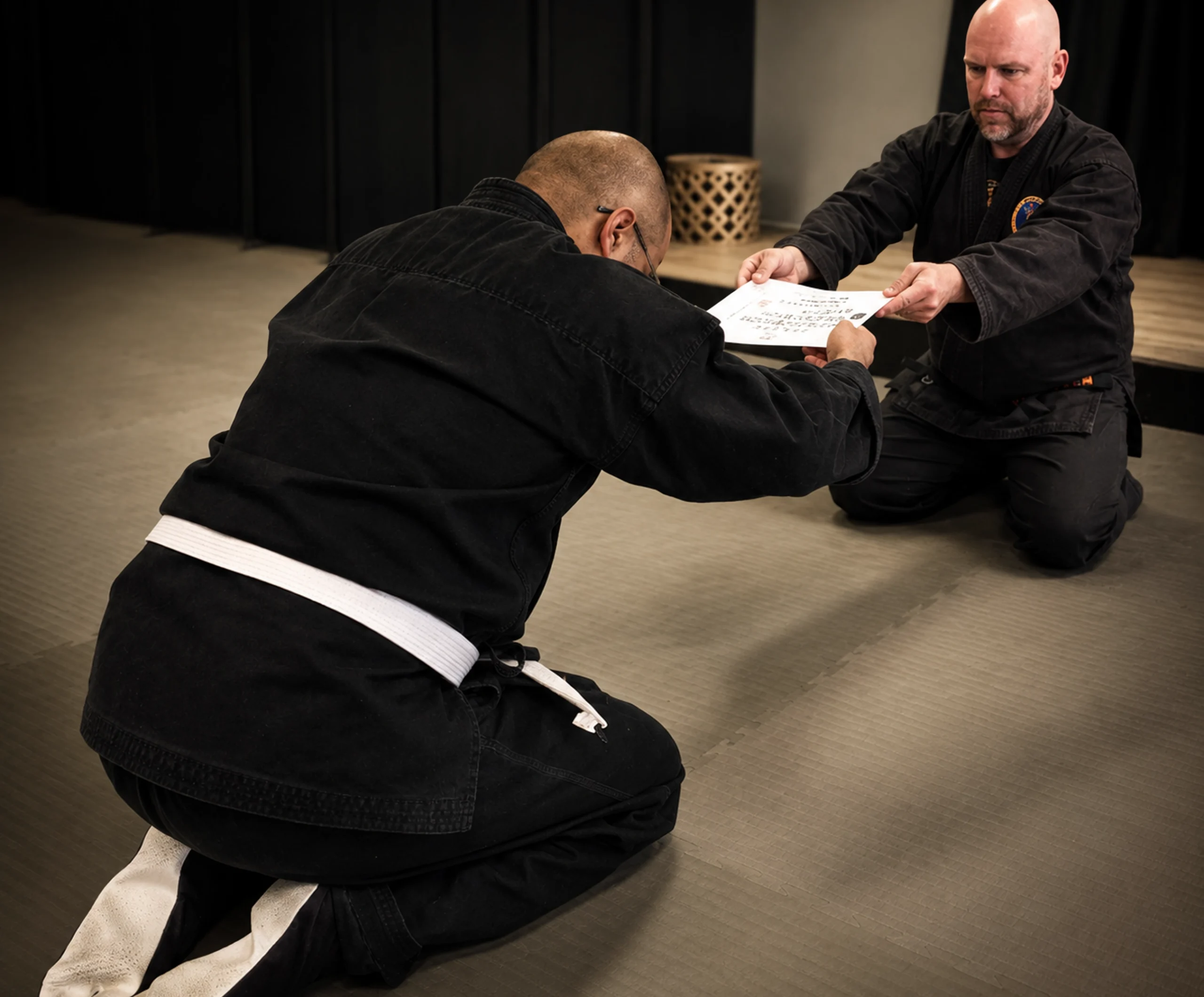

Structured progression—beginner to black belt
Master practical fundamentals before advancing
Earn rank through demonstrated proficiency
Ryu-ha &
Menkyo
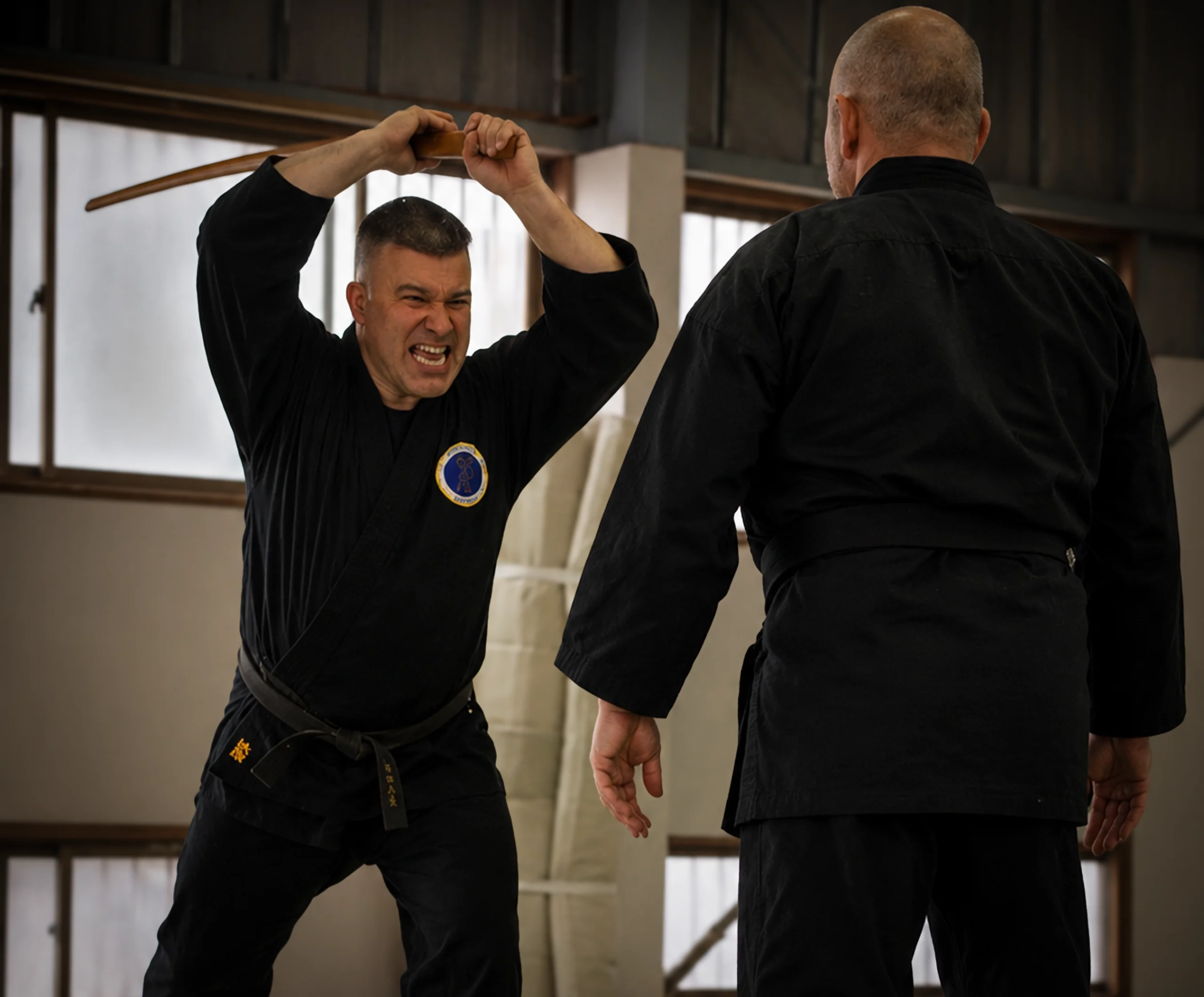
Learn directly from the original densho
Learn through authentic Japanese traditions
Study martial complete systems
Kobukan
Buki-jutsu

Classical weapons taught alongside Taijutsu
Build timing, distance, and body mechanics
Integrated curriculum from beginner to advanced

Kyu progression
Progressive Development.
Earned Through Proficiency.
Every Kobukan student begins with the same structured progression through Ninpo Taijutsu and Jujutsu. Each rank builds upon the last, developing practical skill, character, and understanding through demonstrated proficiency—not time served.
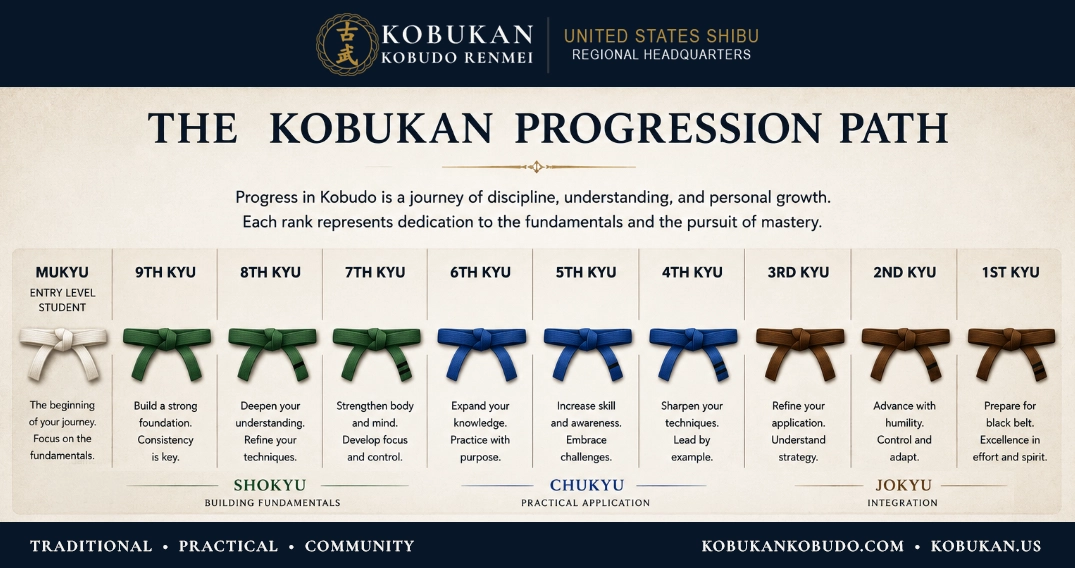

Build a Strong Foundation
Each level has specific requirements and learning goals.

Demonstrated Proficiency
Advance through demonstrated proficiency—not attendance.

Preparation for Black Belt
The Kyu curriculum builds the technical foundation required for advanced study.

Dan Progression
Advanced Understanding.
Deep Technical Refinement.
In the Kobukan, earning a black belt marks the beginning of deeper study—not the completion of training. The Kobukan recognizes ten degrees of black belt (Dan), representing a lifetime of continued learning, refinement, and responsibility. This overview illustrates progression through Godan (5th Dan), where practitioners build a foundation in the core Ryu-ha of the Kobukan. Advancement continues through Judan (10th Dan) as knowledge, leadership, and contribution to the tradition deepen.
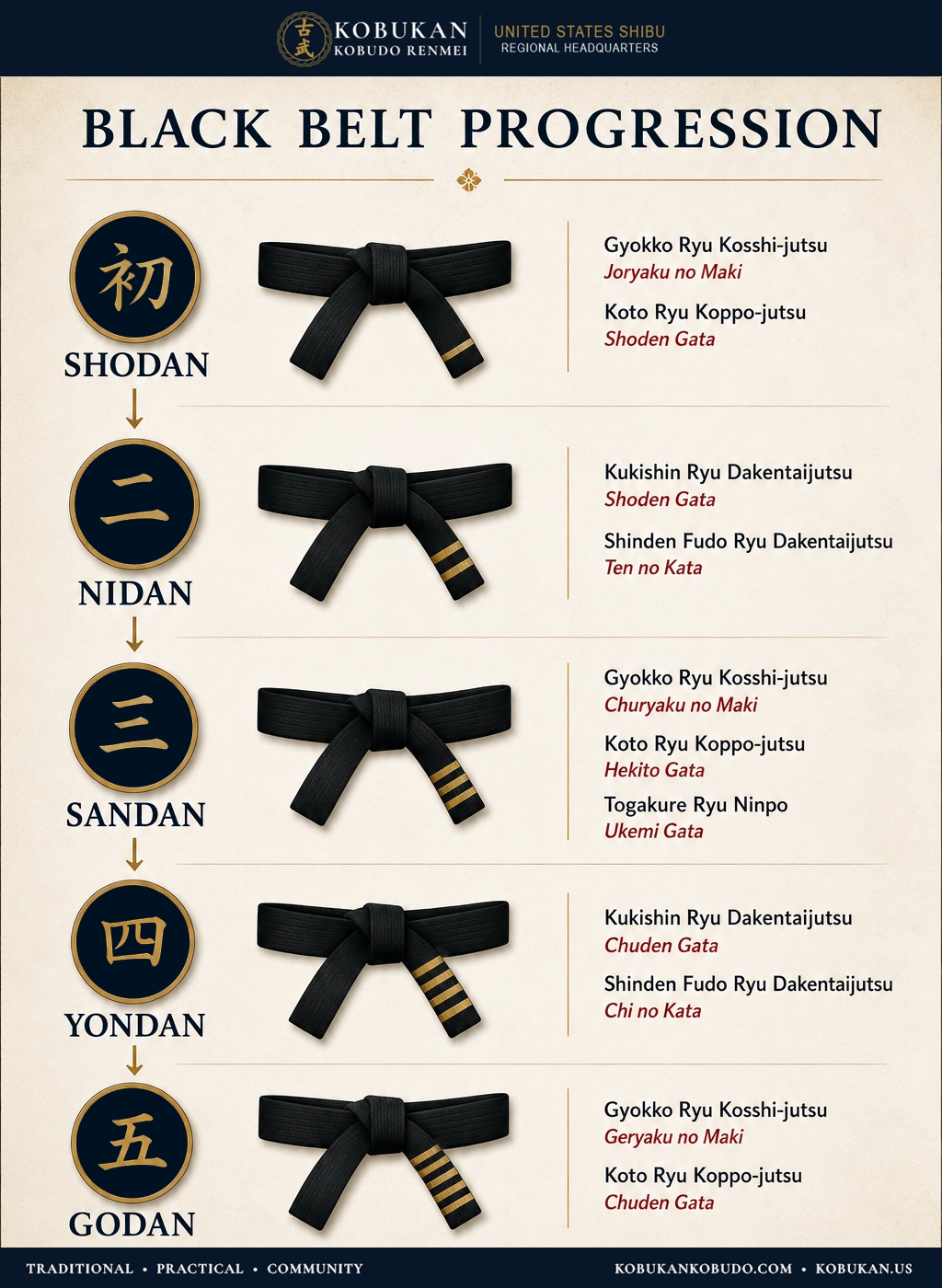

Study Core Ryu-ha
Each Dan rank expands your understanding through the classical traditions preserved within the Kobukan.

Integrated Principles
Learn not only techniques, but the principles that connect the Ryu-ha into a complete martial system.
Lifelong Refinement
Progress beyond Godan through continued technical development, teaching, leadership, and preservation of the art.

Ryu-ha & Menkyo
Preserving Classical Japanese Martial Traditions
FROM FUNDAMENTALS TO LIVING TRADITIONS.
A black belt is not the destination—it's the beginning of a deeper journey.
As students build practical skill through the Kyu and Dan curriculum, they begin exploring the classical Japanese martial traditions that form the foundation of everything we teach. These complete systems—known as Ryu-ha (流派)—preserve generations of technical knowledge, strategy, and martial philosophy passed from teacher to student over centuries. Many of the traditions studied within the Kobukan are recognized as Koryu (古流)—classical schools that preserve the methods, principles, and character of Japan's historic martial traditions.
Rather than simply memorizing techniques, students progressively discover how each movement fits within a complete martial system. This transforms practice from learning what to do into understanding why each technique exists. As technical skill grows, students begin to see how individual techniques connect to timeless principles that have been refined through generations of practical experience.
For students who continue their journey, the Kobukan also offers progression through the traditional Menkyo (免許) licensing system. Unlike belt ranks, which recognize overall progression as a martial artist, Menkyo recognizes a practitioner's understanding and responsibility within a specific Ryu-ha. It reflects not only technical development, but also the trust to preserve and faithfully transmit that tradition.
Traditionally, the authority to issue Menkyo licenses was reserved for those who had themselves received transmission within a Ryu-ha and were entrusted with preserving and passing that tradition to the next generation. For this reason, opportunities to study toward traditional licensing have historically been uncommon, particularly outside Japan.
Today, the Kobukan provides a structured pathway for qualified students to progress beyond Dan rank and pursue traditional Menkyo licensing within the Ryu-ha preserved by the organization, as a part of the Kobukan lineage. Few martial arts schools offer this opportunity as part of a transparent educational pathway, making it one of the defining characteristics of Kobukan training.
Whether your goal is practical self-protection, historical understanding, or lifelong mastery, Ryu-ha and Menkyo progression offer a path that extends far beyond black belt—connecting today's practitioners with living traditions that have been preserved for generations.

Buki-jutsu
Classical weapons training
Complete Martial Understanding
The Kobukan Kobudo Renmei preserves and teaches a wide range of traditional Japanese weapons (Buki-jutsu), each contributing unique strategies, mechanics, and historical perspectives. While our curriculum includes many additional weapons and specialized disciplines, this series focuses on a carefully selected group of core systems that provide the greatest breadth of transferable skills and principles.
Through the study of the Rokushaku Bo, Hanbo, Biken, and other foundational weapons presented in these volumes, students develop the essential body mechanics, distancing, timing, angling, and tactical understanding that underpin the wider study of Kobudo. These systems were chosen not because they are the only weapons of importance, but because they establish a strong foundation upon which more specialized weapons can be understood and mastered.
As your training progresses, you will encounter additional weapons and traditions that expand upon these same principles. Although each weapon possesses its own methods, strategies, and characteristics, they are united by common martial concepts. In time, you will discover that the greatest lesson is not learning to use a particular weapon, but understanding the principles that allow any weapon to become an extension of the practitioner.
Rokushaku Bo-jutsu
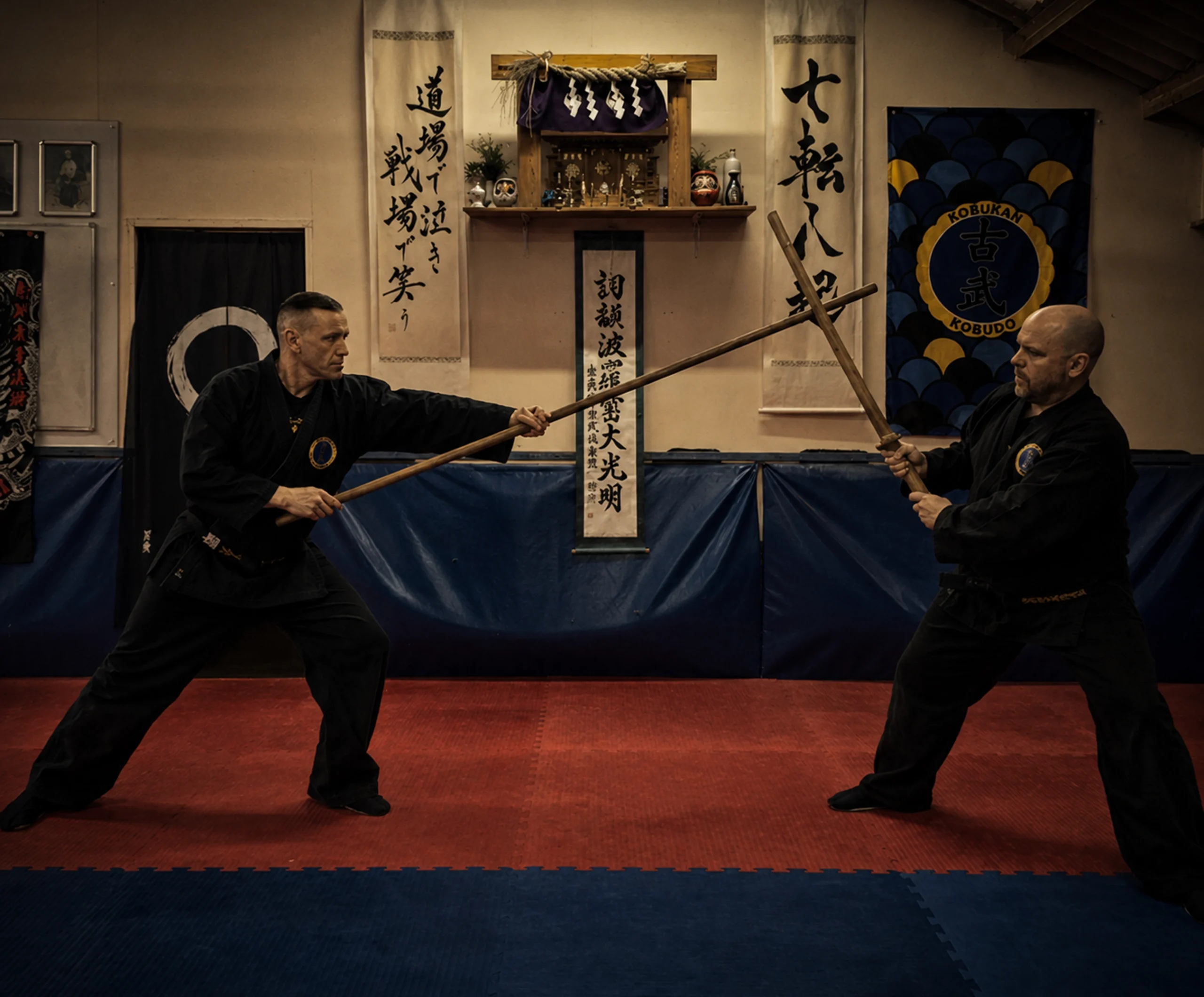
The Foundation of Classical Staff Training
Progressive Curriculum
Kukishin Ryu Bo-jutsu
Earn rank through demonstrated proficiency
Hanbo-jutsu
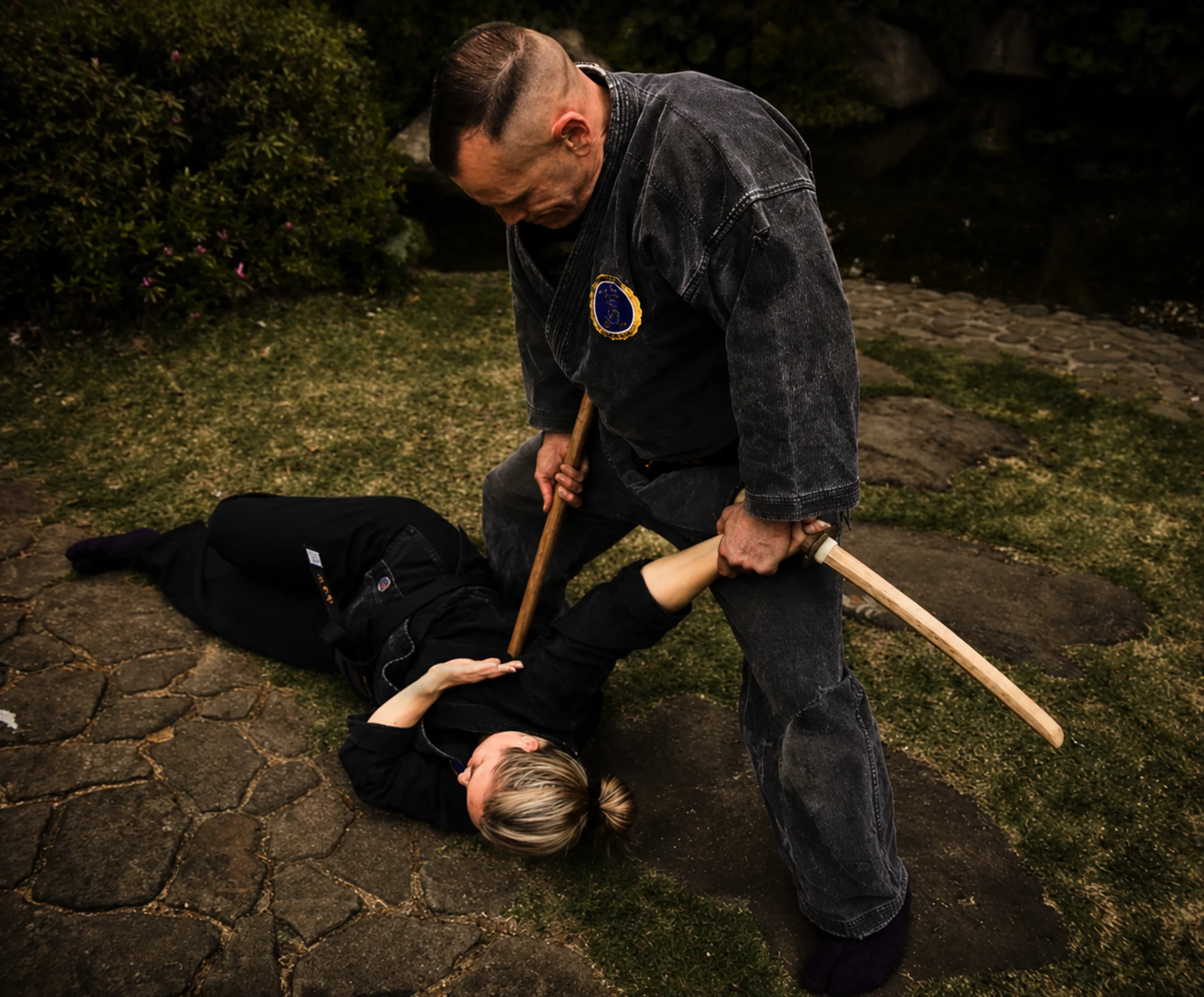
Half Staff Training
Progressive Curriculum
Kukishinden Hanbo-jutsu
Kukishin Ryu Jo-jutsu
Biken-jutsu
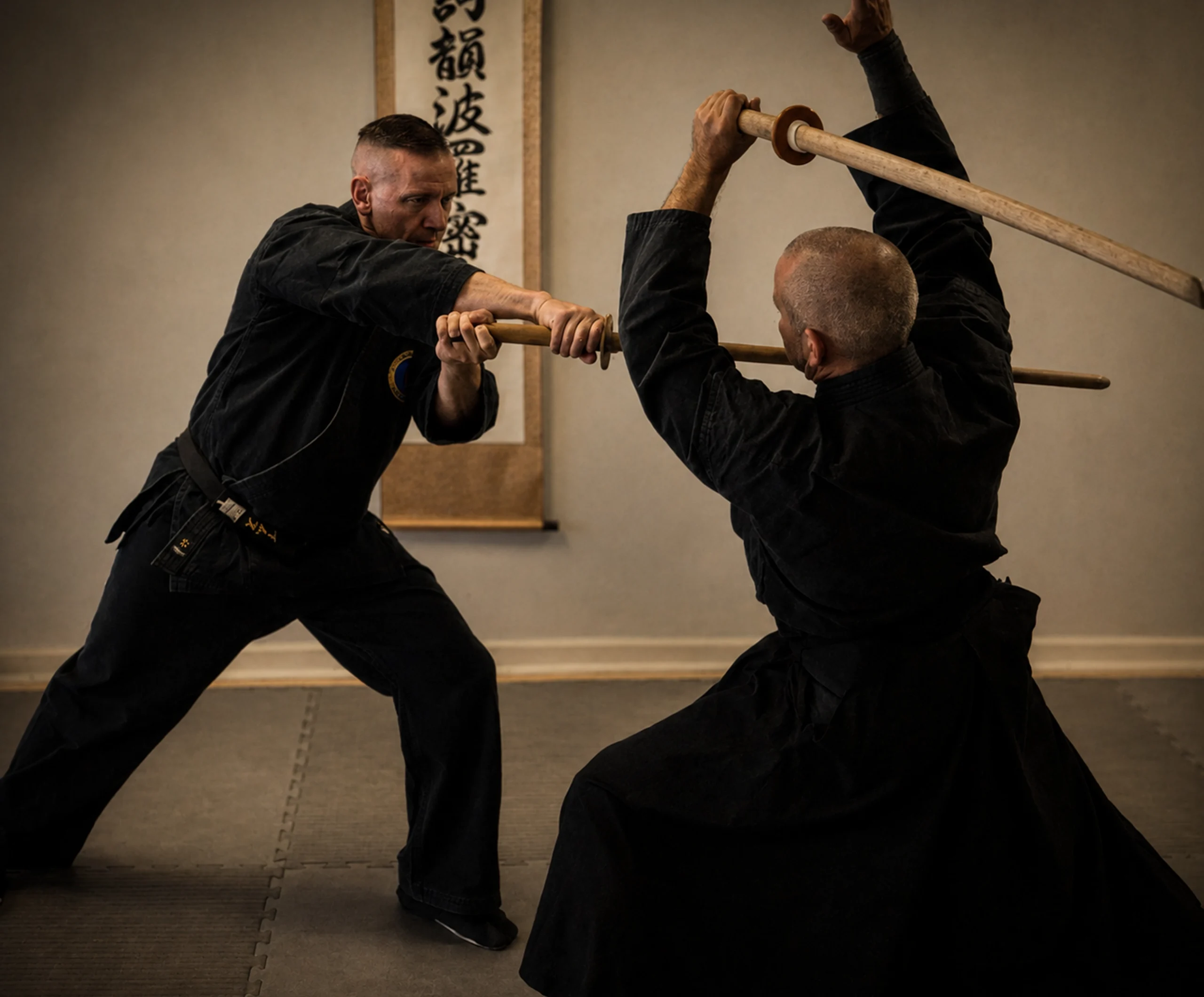
Traditional Japanese Sword Training
Progressive Curriculum
Kukishin Ryu Biken no Ho
Togakure Ryu Biken-jutsu
Hishigi bo-jutsu
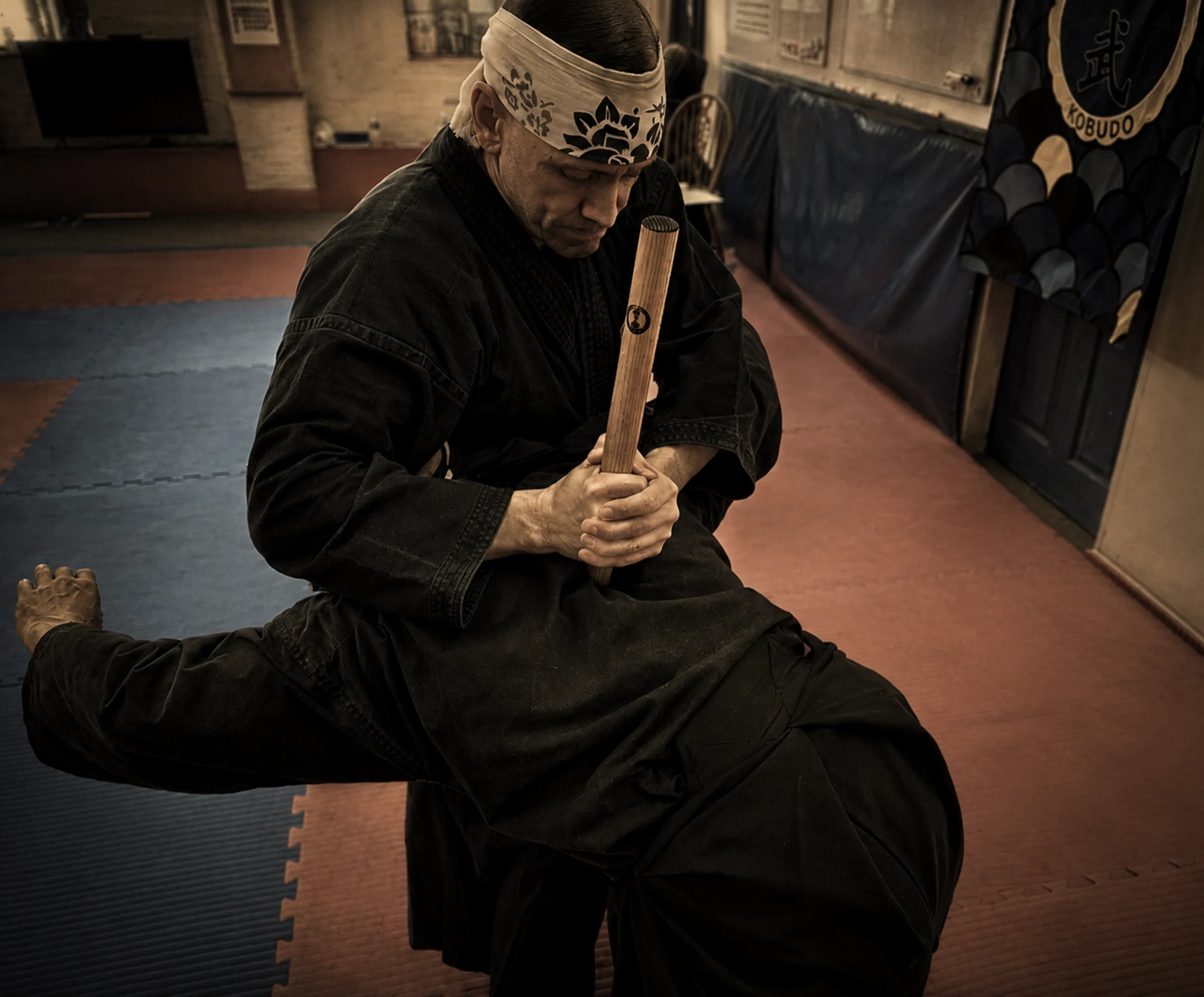
Crushing Stick Training
Progressive Curriculum
Asayama Ichiden Ryu Hishigi-bo
Practical short stick defense
WHY KOBUKAN BUKI-JUTSU IS DIFFERENT
Authentic Transmission
Study kata directly from the densho, preserving the structure, progression, and intent of the original traditions.
Practical Application
Learn not only the kata themselves, but also the combative principles and practical application that give every movement purpose.
PURPOSEFUL PROGRESSION
Fundamental principles are developed naturally through authentic kata, allowing students to build skill through the curriculum itself.
Lifelong Learning
The Kobukan's core weapons curriculum emphasizes Rokushaku Bo, Hanbo, and Biken because together they develop transferable martial principles while remaining practical to study throughout every stage of life.
While each Buki-jutsu system teaches the unique characteristics of its weapon, they are ultimately expressions of the same underlying martial principles. Distancing, timing, angling, posture, balance, body mechanics, and intent remain consistent whether holding a Hanbo, Rokushaku Bo, Biken, or another traditional weapon. As your study progresses, you'll discover that the weapon itself is only one part of the lesson. True proficiency comes from understanding the principles that unite them all, allowing skills developed in one discipline to strengthen your understanding of the others.
The Kobukan Standard
Receive a complimentary copy of the framework that guides skill, character, and lifelong development within the Kobukan.
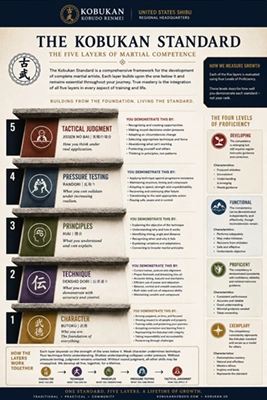
The Kobukan Standard defines the educational philosophy that guides skill level within the Kobukan organization. Rather than measuring progress by rank alone, it explains the five interconnected layers of martial competence that shape lifelong development.
Whether you're exploring traditional Japanese martial arts for the first time or comparing different organizations, this guide provides a clear introduction to what makes the Kobukan approach unique.
The Five Layers of Martial Competence
How the Kobukan Measures Growth
The Relationship Between Skill, Principles, and Judgment
We'll email you a copy directly. We never give out your info to 3rd parties.